
Influential Women Distinguishes Maria A. Komugabe For Advancing Global Health Innovation Using Geospatial Data Science
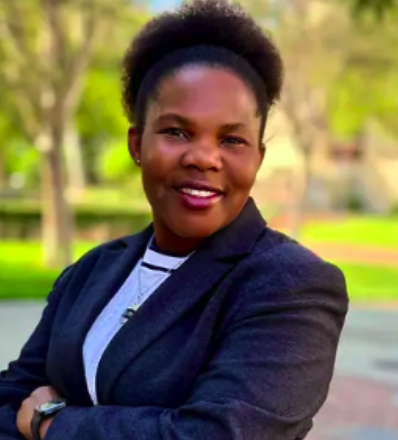
Claremont, California – Maria Assumpta Komugabe, Ph.D., is a geospatial data scientist, solutions innovator, researcher, and educator whose work is redefining how technology is used to address global health inequities. Her research focuses on closing the “implementation gap” in global health—transforming complex spatial data into actionable, real-world interventions that improve healthcare delivery for the world’s most vulnerable populations.
Dr. Komugabe’s work moves beyond theoretical modeling into applied, high-impact systems designed to solve persistent healthcare challenges. Grounded in the Esri ecosystem, she builds advanced dashboards and spatial data science tools that empower governments and institutions to respond more effectively to public health crises such as malaria. Her systems integrate climate intelligence, predictive analytics, and logistics optimization to ensure that medical supplies—including malaria nets and essential medicines—are delivered to the right place at the right time, even in highly variable environmental conditions.
At the core of her innovation is a belief that data must serve people directly. Through her work, Dr. Komugabe has developed systems that predict climate-driven risk shifts and dynamically redistribute healthcare resources to match emerging needs. This approach is particularly impactful in regions where infrastructure limitations and environmental unpredictability have historically hindered effective disease response and prevention efforts.
Central to her contributions is the Adaptive Digital Resilience Framework (ADRF), a model she developed to integrate machine learning with real-time Geographic Information Systems (GIS). The framework is designed around three foundational principles: Adapt, Digitize, and Strengthen Resilience. It enables health systems to adapt to shifting disease landscapes using artificial intelligence, transform raw data into actionable intelligence, and build resilient distribution networks capable of supporting malaria interventions and other critical health deliveries in low-resource settings.
Dr. Komugabe’s research portfolio includes five published studies that collectively establish a blueprint for protecting high-risk populations through predictive geospatial modeling. Her work directly contributes to the United Nations Sustainable Development Goal (SDG) 3.3, which aims to end malaria and other neglected tropical diseases by 2030. A key emphasis of her research is improving maternal and neonatal outcomes, particularly among pregnant women in malaria-endemic regions, through predictive dashboards that anticipate outbreak spikes and optimize intervention timing.
Her doctoral research at Claremont Graduate University provides the technical foundation for transitioning global health systems from reactive response models to proactive, automated resource allocation systems. By integrating predictive analytics with operational health delivery frameworks, Dr. Komugabe offers a scalable model for aligning digital innovation with real-world implementation in emerging economies. Her work ensures that digital transformation in healthcare is not only technologically advanced but also inclusive, equitable, and responsive to underserved populations.
Following the completion of her Ph.D., Dr. Komugabe aims to expand the global application of her geospatial frameworks. She is focused on refining and replicating her models across diverse regional health systems, adapting them to local contexts while maintaining a consistent focus on predictive resilience and equitable healthcare delivery. Her long-term vision is to establish data-driven health systems as a global standard for intervention planning and disease prevention.
Dr. Komugabe’s academic journey reflects a remarkable record of discipline and resilience. After earning her Bachelor of Education and her first Master’s degree in Information Technology from Uganda Martyrs University, she advanced to Claremont Graduate University for further specialization. There, she completed both a Master of Information Systems and Technology (with a GIS concentration) and a Ph.D. in Information Systems and Technology in just four years, while navigating the demands of international study and advanced research.
Today, Dr. Komugabe serves in multiple leadership and academic roles across industry and higher education. As a Curriculum Consultant and Liaison in the Computer Science Department at Harvey Mudd College, she supports curriculum development and guides students in clinic projects for international institutions, including efforts supporting Musizi University in Uganda.
Dr. Komugabe also serves as a Lecturer in Cyber and Decision Sciences at California State University, San Bernardino, while maintaining a long-standing lecturing role in Information Technology at the University of Kisubi in Uganda. In addition, she contributes to the Center for Information Systems & Technology at Claremont Graduate University and previously served as a Human Resource Data Analyst Intern at the Sacramento Municipal Utility District (SMUD), where she applied data analytics to workforce and operational systems.
Across these roles, Dr. Komugabe bridges academia, public service, and applied research, ensuring that technological advancement remains connected to human impact. Her work reflects a consistent commitment to translating complex systems into tools that improve decision-making, strengthen institutions, and support community well-being.
When asked what drives her, Dr. Komugabe consistently returns to her father as the foundational influence in her life and career. She describes her success as inseparable from his belief in the transformative power of education. He made the extraordinary decision to trade his only land and security to support her academic journey, believing that education was more valuable than any material possession.
As the eighth of ten children, Dr. Komugabe views her achievements not only as personal milestones but as the realization of a generational belief in education as an unshakable asset. Her father often told her that the mind is the most valuable piece of real estate and that wisdom is the engine behind every solution and breakthrough she creates. This philosophy continues to guide her work, reinforcing her commitment to using knowledge as a tool for global transformation.
The trajectory of her career was also shaped by early experiences that redefined her sense of purpose and agency. During her early professional journey in Uganda, Dr. Komugabe worked extensively without recognition until a mentor offered a defining perspective, telling her she was not “at the table” but rather “on the menu.” That moment became a catalyst for change, pushing her to pursue advanced education and establish her own intellectual and professional space.
Later, her advisor reinforced a second guiding principle during a period of financial and academic difficulty: the necessity of persistent execution. This advice shifted her mindset from limitation to problem-solving, instilling a belief that barriers can be overcome through determination and action.
These experiences collectively shaped her philosophy that resilience is not passive endurance but active creation. Dr. Komugabe now carries these lessons forward in her mentorship of students and emerging professionals, encouraging them to move beyond perceived limitations and build their own spaces of influence.
For young women entering STEM fields, Dr. Komugabe emphasizes the importance of recognizing value even when external validation is absent. She acknowledges the systemic challenges present in many technical fields, where women—particularly women of color—often must perform at heightened levels to achieve equal recognition.
Rather than discouragement, she advocates for disciplined consistency and intentional self-definition. She encourages women to prioritize environments that recognize and amplify their contributions, rather than diminish them. In her view, professional growth should not require shrinking oneself to fit existing structures but expanding into spaces that allow full expression of capability and identity.
Dr. Komugabe also highlights a broader systemic issue within geospatial science and STEM fields: a “human visibility gap.” While the discipline often focuses on technical visibility metrics, she argues that structural bias frequently determines whose contributions are seen and valued. Her experience navigating these environments has reinforced her belief that the field must evolve to ensure equitable representation in both data interpretation and leadership.
She credits her academic journey at Claremont Graduate University with demonstrating what becomes possible when institutional structures actively support inclusion. Through mentorship and collaborative research environments, she experienced firsthand how removing systemic “barriers” enhances both individual performance and collective innovation.
At the heart of Dr. Komugabe’s philosophy is a commitment to values-driven leadership. She describes her guiding principles as Prayer, Courage, Determination, and Fearlessness—values deeply rooted in her upbringing and her father’s sacrifices. These principles continue to shape her approach to research, leadership, and education.
She emphasizes that discipline is not merely structure but a form of confidence grounded in purpose. It is the belief that one’s value is defined not by origin or circumstance, but by the quality and impact of one’s work. In her view, environments that foster respect, equity, trust, and emotional support are essential for enabling individuals to thrive.
Dr. Maria A. Komugabe is more than a researcher; she is a bridge between disciplines, sectors, and communities. Whether designing predictive health systems, teaching future technologists, or collaborating across international institutions, she remains committed to ensuring that data science translates into tangible human impact.
“I live by the mantra that ‘Determination determines Destiny.’ I believe that she who dares wins—not through luck, but by staying true to her vision until the world around her matches the one in her mind. My goal is to use my journey to help others realize that their destiny is theirs to shape, too.”
Learn More about Dr. Maria A. Komugabe:
Through her Influential Women profile, https://influentialwomen.com/connect/Maria-Komugabe
Influential Women
Influential Women provides a platform where women from all backgrounds can connect, share their perspectives, and create content that empowers themselves and others. Through storytelling, thought leadership, and creative expression, Influential Women amplifies voices that inspire change.
Editorial Team
Influential Women
email us here
Legal Disclaimer:
EIN Presswire provides this news content "as is" without warranty of any kind. We do not accept any responsibility or liability for the accuracy, content, images, videos, licenses, completeness, legality, or reliability of the information contained in this article. If you have any complaints or copyright issues related to this article, kindly contact the author above.
