

Biosimilar Insulin Market to Reach US$ 6.0 Bn by 2033 at 14.9% CAGR | Persistence Market Research
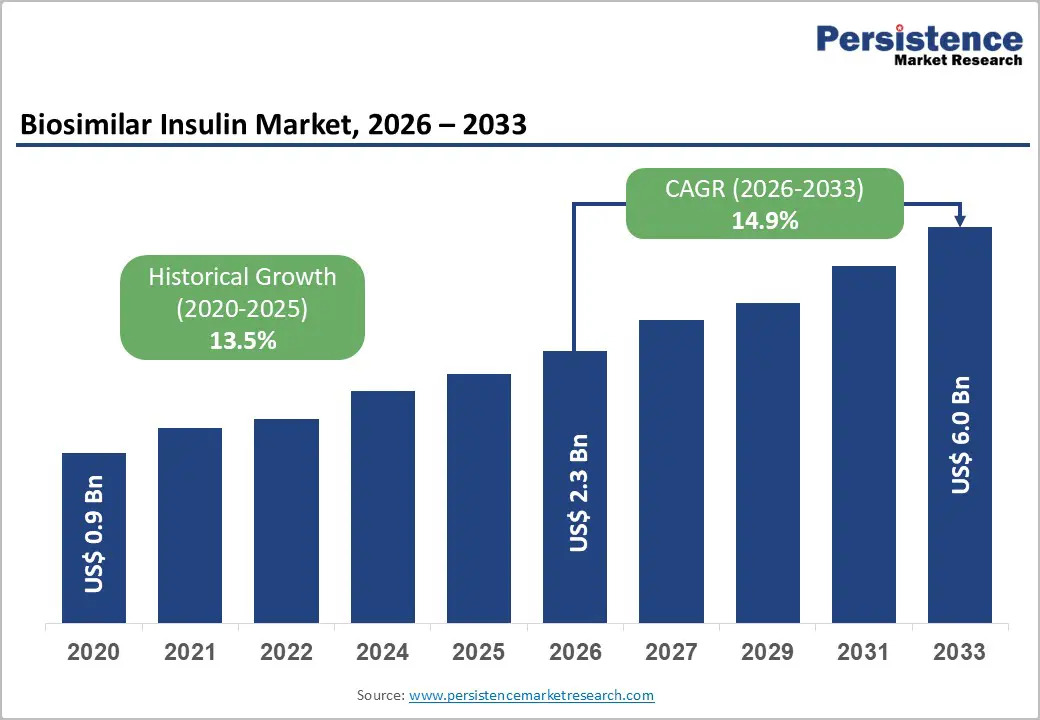
Biosimilar Insulin Market
BRENFORD, LONDON, UNITED KINGDOM, July 15, 2026 /EINPresswire.com/ -- The global biosimilar insulin market is witnessing remarkable growth as healthcare providers and governments increasingly focus on improving access to affordable diabetes treatment. Biosimilar insulin products provide comparable safety, quality, and efficacy to reference biologics while helping reduce treatment costs. Rising diabetes prevalence, expanding healthcare infrastructure, and favorable regulatory pathways are encouraging the commercialization of biosimilar insulin across developed and emerging economies. Manufacturers are also investing in advanced manufacturing technologies and strategic collaborations to strengthen product availability. These factors are expected to reshape insulin therapy while supporting broader patient access to high-quality biologic medicines worldwide.
According to Persistence Market Research, the global biosimilar insulin market is estimated to grow from US$ 2.3 Bn in 2026 to US$ 6.0 Bn by 2033. The market is projected to expand at a CAGR of 14.9% during the forecast period from 2026 to 2033. Increasing patent expirations of branded insulin products, growing acceptance of biosimilars among healthcare professionals, and supportive reimbursement policies are accelerating market expansion. Long-acting biosimilar insulin products continue to attract strong demand because they improve patient convenience and treatment adherence. North America remains the leading regional market owing to advanced healthcare systems, high diabetes prevalence, and faster adoption of innovative biologic therapies.
Want Market Insights? Get Your Free Report Sample : https://www.persistencemarketresearch.com/samples/11674
Key Highlights from the Report
➤ The global biosimilar insulin market is projected to grow from US$ 2.3 Bn in 2026 to US$ 6.0 Bn by 2033, registering a CAGR of 14.9%.
➤ Rising diabetes incidence is driving sustained demand for affordable biosimilar insulin therapies worldwide.
➤ Patent expirations of branded insulin products are creating significant growth opportunities for biosimilar manufacturers.
➤ Regulatory support and streamlined approval pathways are accelerating biosimilar product commercialization.
➤ Long-acting biosimilar insulin products continue to gain popularity due to improved patient compliance.
➤ Strategic partnerships, manufacturing expansion, and product innovation remain key competitive strategies across the market.
Market Segmentation
The biosimilar insulin market can be segmented by product type, insulin formulation, distribution channel, and end user. Based on product type, long-acting biosimilar insulin accounts for a significant market share because it offers better glycemic control with fewer daily injections. Rapid-acting and premixed biosimilar insulin products also continue to witness increasing adoption among diabetic patients requiring flexible treatment regimens. Growing physician confidence in biosimilar effectiveness further supports product diversification across healthcare systems.
From an end-user perspective, hospitals, specialty clinics, and retail pharmacies represent major demand centers for biosimilar insulin products. Hospitals remain important because they manage complex diabetes cases and initiate insulin therapies. Retail and specialty pharmacies are expanding their role by improving product accessibility and patient counseling services. Increasing awareness regarding cost-effective diabetes management is encouraging broader adoption across both institutional and outpatient healthcare settings.
Customize This Report for Your Exact Requirements : https://www.persistencemarketresearch.com/request-customization/11674
Regional Insights
North America dominates the biosimilar insulin market due to high diabetes prevalence, sophisticated healthcare infrastructure, favorable reimbursement policies, and strong investments in biologic drug development. The presence of leading pharmaceutical manufacturers and increasing physician acceptance of biosimilar insulin products further strengthen regional growth. Regulatory initiatives supporting biosimilar approvals continue to encourage market expansion across the region.
Europe represents another important market supported by mature biosimilar regulations, widespread healthcare coverage, and strong emphasis on reducing treatment costs. Meanwhile, Asia Pacific is emerging as a high-growth region due to expanding diabetic populations, improving healthcare access, increasing awareness, and government initiatives promoting affordable biologic medicines. Growing domestic manufacturing capabilities are expected to enhance future market competitiveness.
Market Drivers
The primary driver of the biosimilar insulin market is the growing global burden of diabetes. Increasing numbers of patients requiring lifelong insulin therapy are placing financial pressure on healthcare systems, creating strong demand for lower-cost treatment alternatives. Biosimilar insulin products help improve affordability while maintaining comparable clinical performance, making them attractive for both healthcare providers and patients.
Another important growth factor is the expiration of patents for branded insulin products. As intellectual property protection ends, manufacturers gain opportunities to introduce biosimilar alternatives with competitive pricing. Improved regulatory frameworks, increasing physician confidence, technological advancements in biologics manufacturing, and expanding investments in biosimilar research are collectively strengthening long-term market growth.
Market Restraints
Despite promising growth, regulatory complexity remains a significant challenge for biosimilar insulin manufacturers. Demonstrating biosimilarity requires extensive analytical, clinical, and manufacturing validation, increasing development costs and approval timelines. These requirements can discourage smaller companies from entering the market and limit product availability.
Market acceptance also remains uneven across several countries. Some healthcare professionals and patients continue to prefer established branded insulin products due to concerns regarding interchangeability and long-term clinical outcomes. Pricing pressures, manufacturing complexity, supply chain requirements, and competitive market dynamics may further restrict growth potential for new market entrants.
Unlock Complete Insights – Buy the Full Report : https://www.persistencemarketresearch.com/checkout/11674
Market Opportunities
Growing healthcare investments across emerging economies present significant opportunities for biosimilar insulin manufacturers. Rising diabetes awareness, expanding insurance coverage, and increasing government initiatives focused on affordable healthcare are creating favorable conditions for broader biosimilar adoption. Companies expanding production capacity and strengthening regional distribution networks can benefit from these evolving market trends.
Future innovation in insulin formulations, digital diabetes management, and patient-centric drug delivery systems will further enhance market opportunities. Strategic collaborations between pharmaceutical companies, contract manufacturers, healthcare organizations, and research institutions are expected to accelerate product development while improving accessibility and supporting sustainable long-term growth.
Company Insights
Key players operating in the biosimilar insulin market include:
• Biocon Biologics
• Eli Lilly and Company
• Sanofi
• Novo Nordisk A/S
• Viatris Inc.
• Gan & Lee Pharmaceuticals
• Julphar
Explore the Latest Trending Research Reports:
Complex Injectable Market
Medical Skin Care Products Market
Persistence Market Research
Persistence Market Research Pvt Ltd
+1 646-878-6329
email us here
Visit us on social media:
LinkedIn
Instagram
Facebook
YouTube
X
Legal Disclaimer:
EIN Presswire provides this news content "as is" without warranty of any kind. We do not accept any responsibility or liability for the accuracy, content, images, videos, licenses, completeness, legality, or reliability of the information contained in this article. If you have any complaints or copyright issues related to this article, kindly contact the author above.
